

Ssd 850 Pro Vs 860 Evo
The Samsung 850 EVO has been a long time favourite and the go-to solution for most users considering, similarly to its more expensive sibling, the 850 PRO, it took advantage of the 3D Vertical-NAND engineering science (which translates to a greater density and a meliorate functioning because of vertical stacking of the 32 cell layers), information technology had a better endurance than its predecessor (went from 72TB full bytes written of the 840 EVO to the electric current 150TB), it came with a longer warranty (5 years instead of the 3 years of the 840 EVO) and it was fast (true, not equally fast every bit the 850 PRO, but not very far behind since both relied on the SATA Three interface which has reached the maximum of its possible chapters).
Furthermore, the value for the coin ratio made the 850 EVO the better option when compared to the PRO serial, which could offering a better endurance and more warranty years, but nothing more. But, later basically dominating the SSD consumer market for about iii years, the competitors caught upwards to the 800 series and Samsung has decided to supercede the 850 EVO with the newer 860 EVO SSD, so, since I got both devices bachelor for testing, let's come across if the latter is a significant upgrade over the 850 EVO and if the Korean manufacturer can yet hold its place as one of the all-time makers of SSDs.
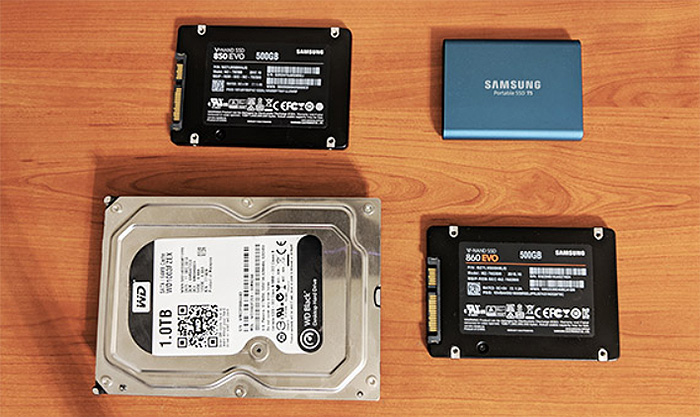
The first thing yous'll discover when browsing through the available 860 EVO models is that, in terms of storage, Samsung decided to get rid of the 120GB model and that's not really a bad decision, since there are unmarried games that can eat up that much past themselves (the 120GB 850 EVO was surprisingly popular and the manufacturers really were happy to add together them to their laptops at a low cost and go along that SSD sticker, but, in 2018, information technology'southward barely enough for the operating system). That being said, the 860 EVO starts from the 256 GB base model and goes up to 4TB; if you lot don't desire the 2.v-inch class cistron SATA III device, Samsung does likewise provide 3 mSATA SSDs (250, 500 and 1,000 GB storage) and four M.2 SSDs (from 250GB to 2TB – while the 850 EVO went only up to 1TB).
1 technology that both the 850 EVO and the 860 EVO share is the V-NAND 3bit MLC and, as I said earlier (in the introduction), this tech stacks 32 layers of 3bit cells one on top of the other, so, instead of going with the 2D model (where yous could only become in length and width), the 3D model keeps a meaty size and has two times the density of the previous model. So, Samsung left this unchanged, as well as the SATA III interface which, well, is still express to 6Gb/s (obviously, this is the technical maximum, while the SSDs can actually achieve much higher speeds). What has inverse is the controller which was upgraded from the MGX of the 850 EVO to the MJX, which will exist able to communicate a lot faster with the host system and it features a much better compatibility with Linux OSes.
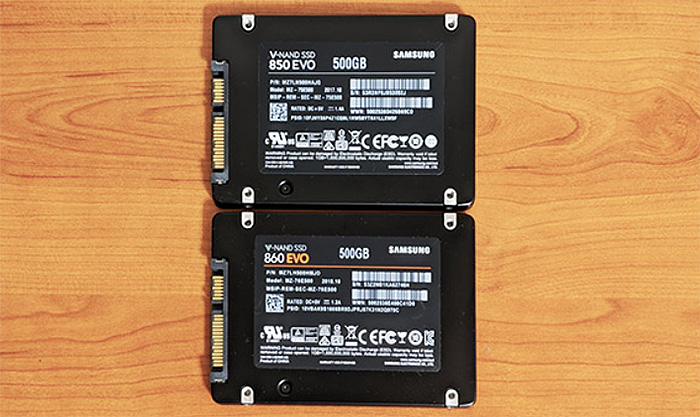
Furthermore, an important improvement is the cache memory which went from the 512 MB Low Power DDR3 from the 850 EVO to the 512 MB Low Power DDR4 SDRAM merely, will that brand any real life divergence? You'll probably not notice it, but yeah, the LPDDR4 is more than energy efficient and has a higher processing performance (it'southward shut to 50 % better). Probably the biggest improvement from the 850 EVO is the endurance which is now 300TB (earlier it was 150TB) or if you write 164GB a day for 5 years which I doubt will happen with possibly some exceptions at which indicate, why are y'all using the EVO series and haven't nevertheless upgraded to the PRO? The warranty stayed the same at v years, just like the 860 PRO and information technology's a bit strange that Samsung cut back from the x years of the 850 PRO (no more constraints from competitors?) It's worth noting that only the writing is the deciding factor in the longevity of an SSD, while the reading has zilch effect.
Now, volition the increased endurance have a significant impact on the user'south feel? In one case again, probably not and the reason is because most people won't really force the device to its maximum everyday, so there's a high chance that they'll change their PC several times until needing to supervene upon the SSD. Some other worth mentioning features that are present on both the 850 and the 860 EVO are the Automatic Garbage Collection Algorithm which, as you may know, an SSD has multiple blocks of data made from pages and, considering that, at some point the SSD volition need to remove sometime blocks to brand space for new ones, the GC searches for what are called stale pages which are usually mixed with good pages, so it tin can move the latter to a new cake of data, while deleting the entire stale block, significant that the SDD should always accept a fresh batch of fresh blocks available).
There's also the Trim Support which is closely linked to the GC and it has the role of letting the Os know precisely which information block are no longer required, then these can be deleted and prepared for rewriting (this feature is needed considering the Os can't see the SSD blocks and the SSD isn't able to see the Os file arrangement – amend explained here: https://arstechnica.com/gadgets/2015/04/ask-ars-my-ssd-does-garbage-collection-so-i-dont-need-trim-right/). Furthermore, both SSDs as well back up the S.Chiliad.A.R.T feature (checks the reliability of the SSD and predicts any potential failures) and in terms of security, both support AES 256-flake Encryption (Class 0) TCG/Opal IEEE1667.
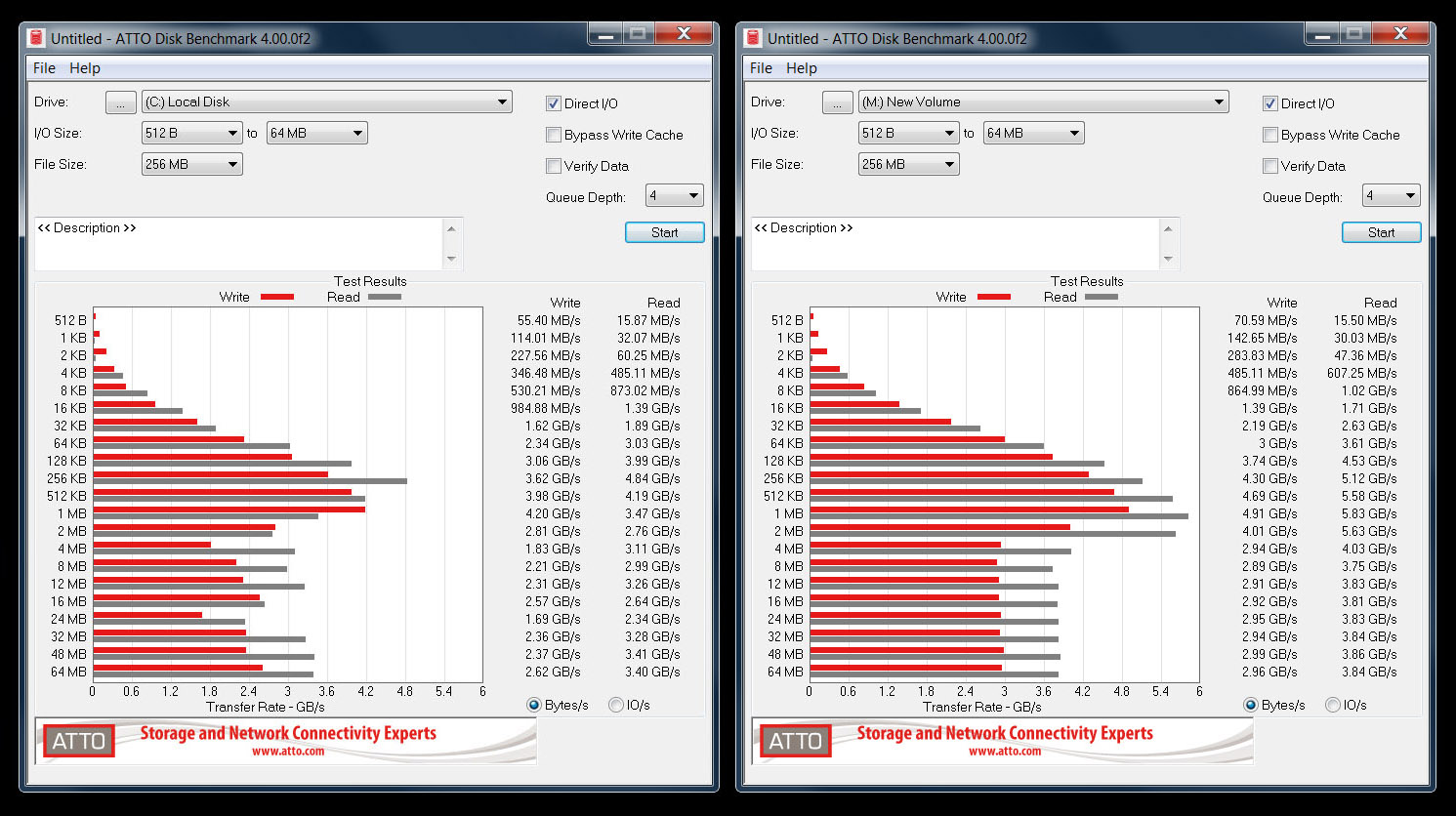
In terms of performance, I did exam both the Samsung 850 EVO and the 860 EVO (in standard fashion and afterward enabling the Rapid mode) using three types of benchmarks: ATTO, CrystalDiskManager and As SSD Benchmark.
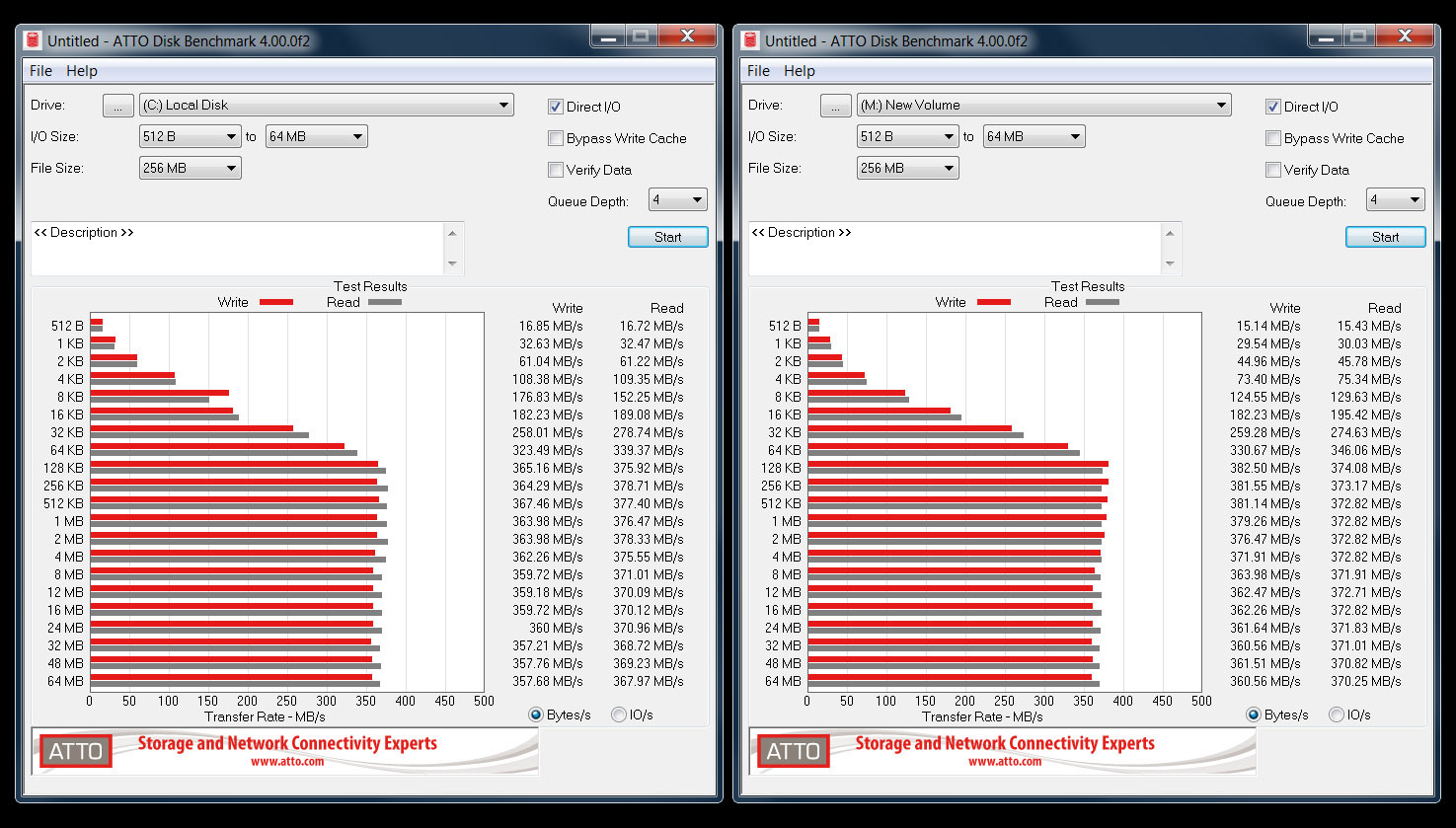
ATTO Criterion (Standard): 850 EVO (left) vs 860 EVO (right)[/explanation]
ATTO Benchmark (Rapid Mode): 850 EVO (left) vs 860 EVO (right)[/explanation]
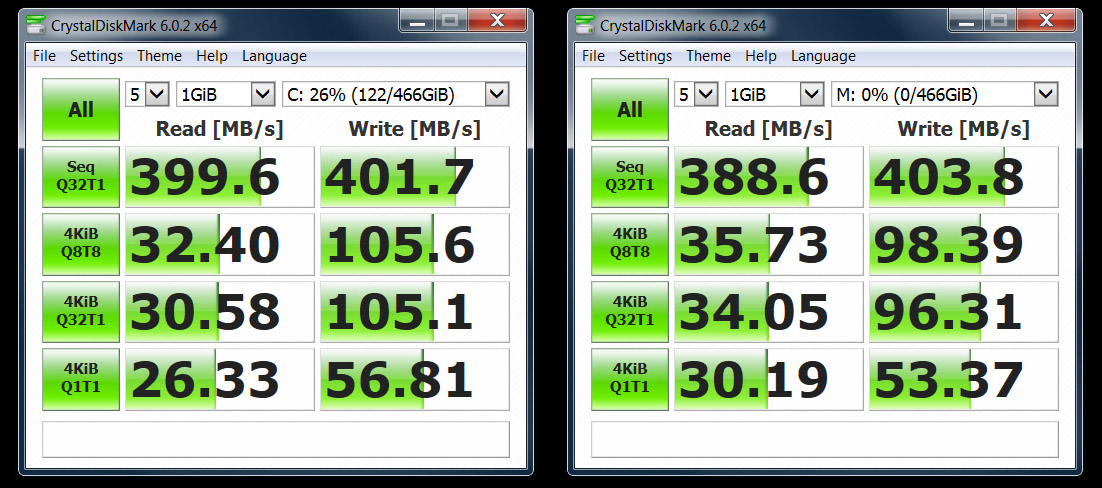
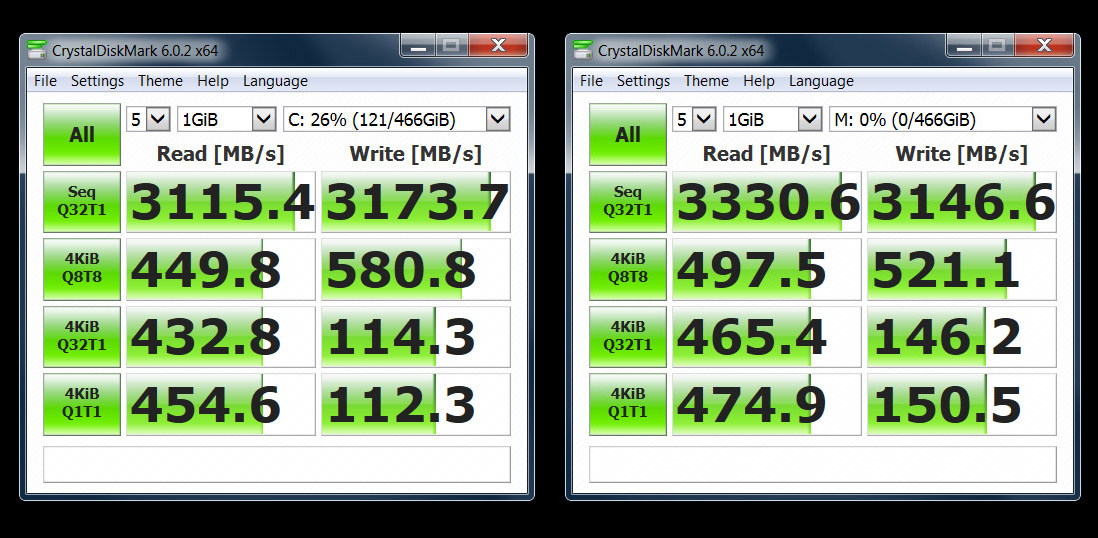
CrystalDiskMark Benchmark (Rapid Mode): 850 EVO (left) vs 860 EVO (right)[/explanation]
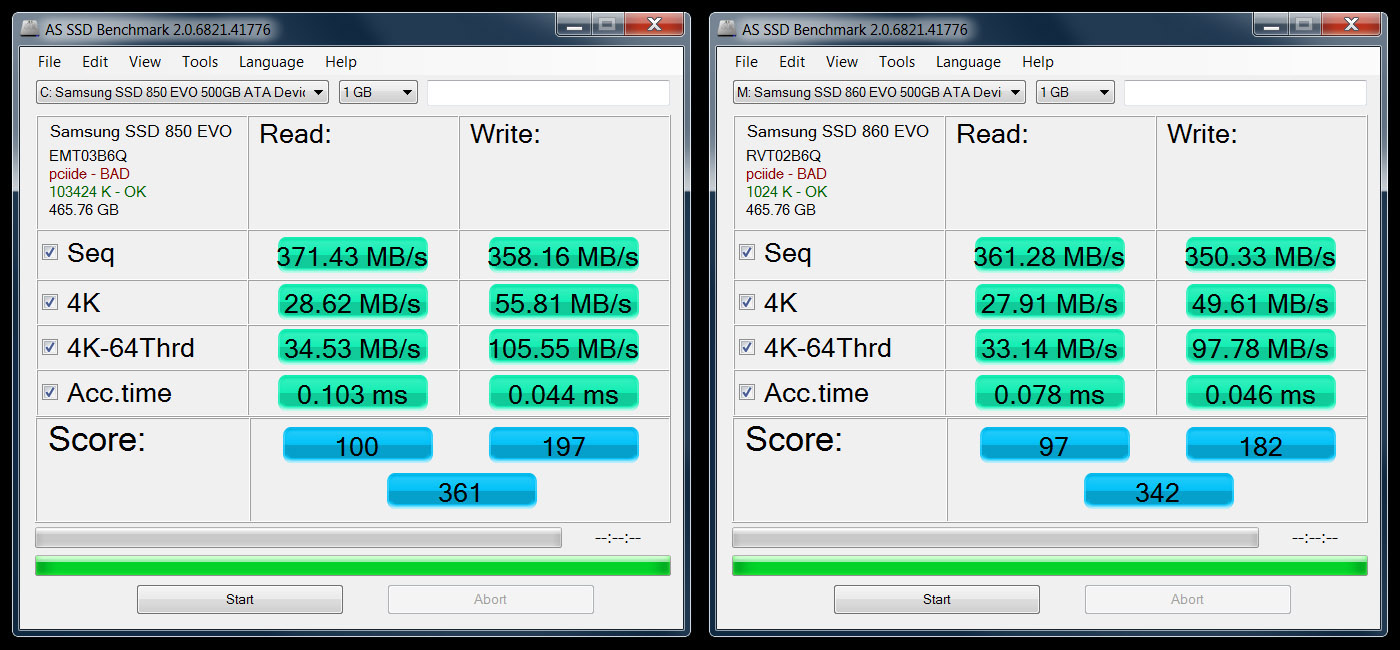
As SSD Benchmark (Standard): 850 EVO (left) vs 860 EVO (right)[/caption]
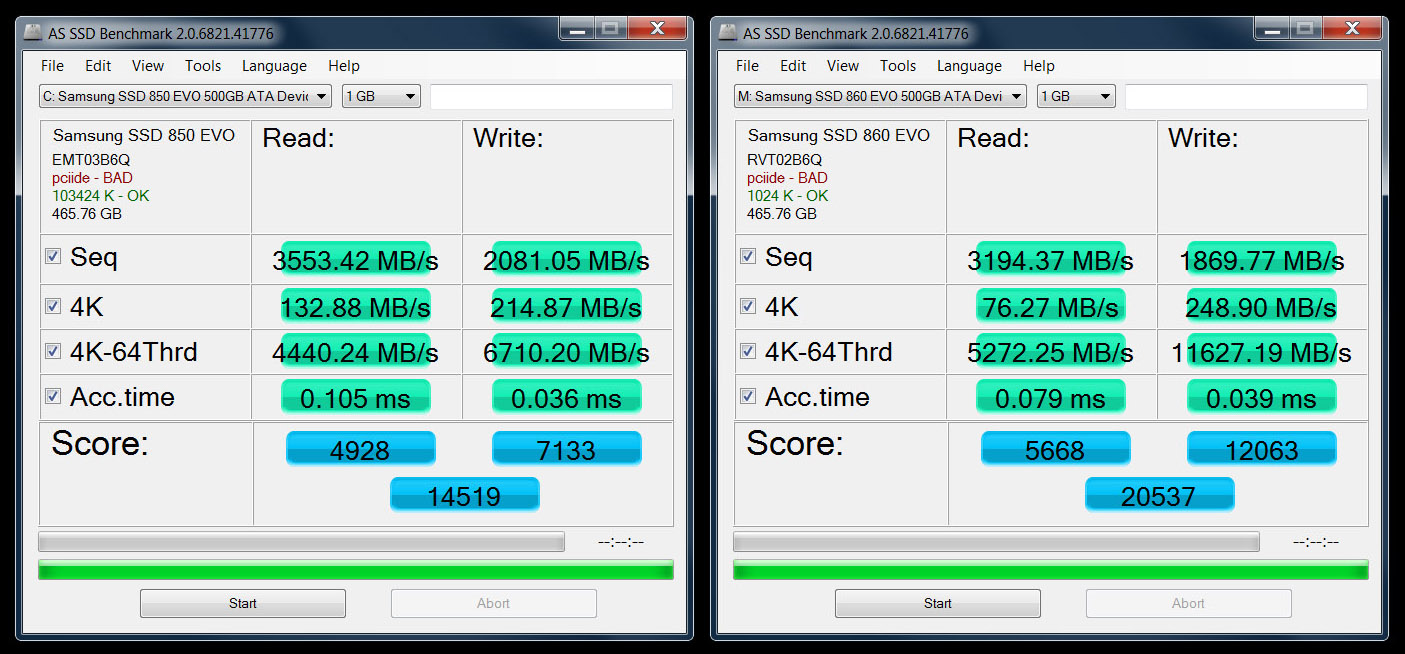
Every bit SSD Benchmark (Rapid Style): 850 EVO (left) vs 860 EVO (right)[/caption]
The results don't show a radical deviation between the two SSDs and depending on the criterion, either the 860 EVO or the 850 EVO would get a slight advantage. This clearly indicates that the user will non feel any departure between the two SSDs in nigh real life conditions. So, why should you upgrade to the 860 EVO? Well, at some point, you lot won't actually have a pick considering Samsung discontinued the 850 EVO, so the 860 EVO will fully accept its place. At the aforementioned time, the 860 EVO does come with some improvements (although nada radical) and the toll tag remains similar to its predecessor, so there is hardly any reason not to choose the newer model over the 850 EVO.

Mark is a graduate in Computer science, having gathered valuable feel over the years working in It as a programmer. Mark is also the main tech writer for MBReviews.com, covering not simply his passion, the networking devices, but as well other absurd electronic gadgets that yous may discover useful for your every mean solar day life.
Source: https://www.mbreviews.com/samsung-850-evo-vs-860-evo/
Posted by: tomczaksayint.blogspot.com
0 Response to "Ssd 850 Pro Vs 860 Evo"
Post a Comment